
Definitive Guide to the VARK Model for Smarter Study and Training
Take Learning Style Quiz Online
Get StartedWhy This Four-Mode Approach Matters for Learners, Educators, and Teams
Across classrooms, bootcamps, and workplaces, individual learning preferences shape how quickly new concepts click and how well skills transfer to real tasks. When instruction aligns with a person’s sensory and cognitive tendencies, retention rises, confidence grows, and frustration drops. Rather than forcing a one-size-fits-all syllabus, a modality-aware strategy adapts materials, sequence, and activities so understanding feels natural. That’s why mentors, coaches, and L&D leaders increasingly design experiences that speak to multiple pathways of comprehension and memory.
Beyond the buzzwords, the practical value comes from using a structured lens to map strengths, gaps, and study tactics that feel intuitive. In many organizations, teams anchor development plans to the widely recognized VARK framework for shared language and consistent practice. This shared vocabulary helps facilitators select the right delivery mix, while also empowering learners to self-advocate for resources that fit how they absorb, reflect, and apply knowledge in fast-moving environments. In practitioner guides, this approach is often referred to as VARK learning.
- Reduce cognitive overload by aligning format with attention patterns
- Enable faster feedback loops through targeted practice drills
- Boost transfer by pairing concept visuals with hands-on rehearsal
- Increase equity by offering multiple routes to mastery
Adopting this perspective does not pigeonhole anyone; it simply widens the toolkit. Most people blend modalities across contexts, so the aim is flexibility, not labels.
How the Model Works, and the Performance Benefits It Unlocks
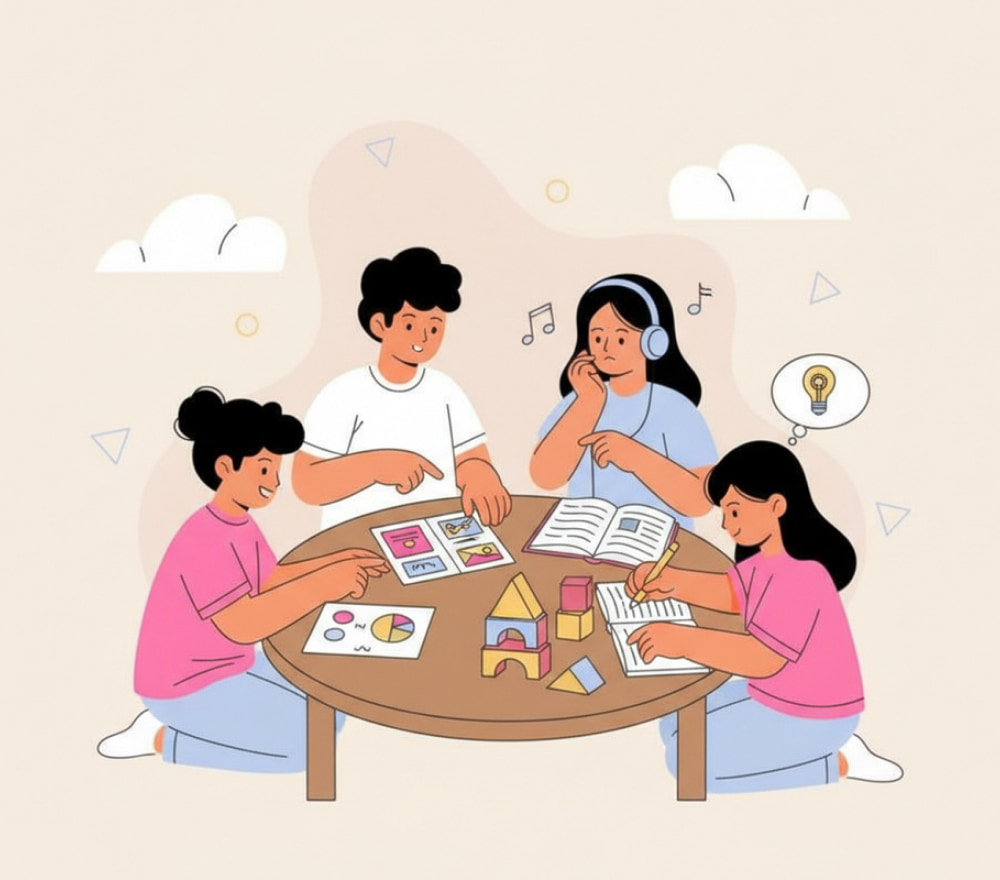
The framework groups preferences into four interacting modes: Visual, Auditory, Read/Write, and Kinesthetic. Visual emphasizes charts and spatial mapping, Auditory favors spoken explanation and dialogue, Read/Write leans on text-driven synthesis, and Kinesthetic prefers movement, manipulation, and simulation. In practice, lessons layered across these channels lead to better encoding and stronger recall. Many instructors plan sessions with built-in pivots, toggling between a diagram, a brief talk-through, a concise handout, and a quick mini-lab for embodied practice. That blend keeps energy high and bias low.
While there are common traits within each mode, the real power lies in matching task demands to the right medium at the right time. In planning curricula, developers often consult the canonical VARK model as a baseline before tailoring activities to unique audiences. Teams then refine delivery through iterative feedback and analytics, evolving the mix as goals or constraints shift across the learning journey.
| Mode | Processing Strengths | Helpful Tactics |
|---|---|---|
| Visual | Pattern spotting, spatial organization, mental mapping | Infographics, flowcharts, timelines, color-coded notes |
| Auditory | Rhythm, tonal nuance, conversational reasoning | Podcasts, debates, read-alouds, voice notes |
| Read/Write | Symbolic precision, conceptual abstraction, synthesis | Outlines, glossaries, summaries, written reflections |
| Kinesthetic | Tactile memory, muscle feedback, experiential insight | Role-plays, prototypes, labs, field observations |
Because each domain offers distinct cognitive advantages, combining them can unlock durable understanding for complex subjects. Many guides describe how to orchestrate mode shifts, and they frequently reference VARK learning styles when suggesting compatible activities for novices and experts alike. A thoughtful sequence might open with a big-picture diagram, move to a peer dialogue, consolidate with a concise brief, and close with a rapid, hands-on exercise to test transfer.
- Layer media to prevent fatigue and keep curiosity alive
- Use retrieval practice across modes to strengthen memory
- Balance concept clarity with real-world application time
From Insight to Action: Tactics for Everyday Study and Training
Strategic learning design starts with intent: what someone should be able to explain, demonstrate, or decide after a session. Once outcomes are clear, select materials that maximize clarity while minimizing friction, and then externalize steps so learners can replicate the process alone. Variety matters here, because a well-timed switch in medium can rescue an otherwise stagnant study block and re-ignite focus. For remote or hybrid settings, asynchronous and synchronous components should dovetail, not duplicate.
To plan a balanced mix, many educators sketch a quick matrix that maps outcomes to modality-rich activities before finalizing slides or worksheets. Numerous program blueprints explicitly list VARK model learning styles as cross-checks to confirm that each outcome has at least two complementary practice opportunities. This light-weight audit ensures every learner finds a comfortable entry point without sacrificing rigor or pace in fast-turn cycles.
- Visual: storyboard hard topics with icons and layered annotations
- Auditory: schedule micro-discussions with rotating facilitators
- Read/Write: build concise cheat-sheets and reflective prompts
- Kinesthetic: simulate decisions with time-boxed scenarios
Personal study plans benefit from a similar approach, with daily routines that interleave media. Many individuals also experiment with small habit tweaks, like narrating steps aloud or sketching flows after reading dense passages, to match their unique VARK learning style preferences without overcommitting to a single technique.
Education and Workplace Use Cases That Deliver Measurable Wins
Schools apply this multi-modal lens to differentiate instruction, while universities use it to tune tutorials, labs, and recitations. Corporate teams weave it into onboarding, safety training, leadership programs, and product enablement, often in tight collaboration with operational leaders. When aligned with clear metrics, multi-modal design improves time-to-proficiency, reduces rework, and elevates engagement. Managers also notice better cross-functional communication as colleagues learn to present ideas in more accessible formats.
To kick off a learning initiative, some teams run a quick intake to map preferences and tailor resource bundles for each cohort. Many facilitators include a short diagnostic alongside goal-setting, and they sometimes complement that with a brief VARK test discussion to help participants interpret results with nuance. The emphasis remains on flexibility, because strengths shift across contexts and tasks, especially as skills deepen.
- Accelerate ramp-up by aligning practice with real task scenarios
- Design inclusive sessions that respect cognitive diversity
- Use analytics to iterate content sequencing and scope
Course designers also gather narrative feedback after pilots to see which elements resonated most. When curating resources, many instructors invite learners to reflect on which activities felt natural, and they may point them toward a structured VARK questionnaire so they can self-calibrate study strategies for future modules.
Choosing the Right Instruments and Making Sense of the Results
Not all diagnostics are created equal, and context matters when selecting a tool. Reliability, interpretability, and accessibility should guide the choice, along with the support materials that help novices act on their results. Equally important is the facilitation plan; a great instrument without a clear debrief can create overconfidence or confusion. Pair concise guidance with examples so participants can translate insights into immediate behavior changes.
Program leads often combine a short screener with observational notes and learner reflections before drawing conclusions. In many professional settings, teams run a lightweight survey and then add practice labs to validate insights, a process that pairs nicely with a formal VARK assessment when deeper personalization is needed for high-stakes curricula. This triangulation tempers bias and better captures the fluid nature of preferences over time.
- Clarify the purpose: placement, personalization, or research
- Safeguard privacy and explain how data will be used
- Translate findings into specific tactics and checklists
As results roll in, align recommendations to real tasks, not just abstract tendencies. Many coaches also maintain a living repository of example activities tied to difficulty levels, a practice that helps them provide targeted guidance grounded in a well-scaffolded VARK learning assessment playbook.
FAQ: Clear Answers to Common Questions
Is a single modality always best for every learner?
Preferences can shift by subject, context, and even time of day, so rigidity often backfires. Effective learning plans interleave multiple modes, using the strongest channel to introduce a concept and secondary channels to reinforce it through retrieval, elaboration, and application.
How should beginners interpret common terminology around this framework?
Start by understanding that the labels are descriptive shortcuts, not fixed identities. Many newcomers search the phrase what is VARK questionnaire to find a primer, and that is useful as long as the results are paired with practical examples and a reminder that preferences evolve with experience.
What if a team wants to try the approach without paying for tools?
Piloting a multi-modal lesson does not require advanced software or extensive budgets. Some providers offer a convenient VARK questionnaire free pathway, and teams can also build simple checklists that prompt learners to sample each mode before choosing a comfortable routine for ongoing practice.
How can educators prevent over-reliance on labels during instruction?
Use the categories to diversify delivery, then redirect attention to outcomes and evidence of learning. Encourage learners to experiment with unfamiliar activities, and include reflective prompts that examine which combinations actually improve recall, speed, and confidence across units.
What metrics demonstrate that multi-modal design is working?
Look for improved retention on spaced quizzes, faster task completion with fewer errors, and richer qualitative feedback about clarity and confidence. Over several cycles, strong programs also see better cross-team communication because people learn to present ideas through multiple, audience-friendly formats.